
Fujifilm X-T30 III Review
Today we are reviewing the Fujifilm X-T30 III.
The Fujifilm X-T30 III was released in November 2025 and represents a logical evolution of the product line. Within this range, Fujifilm makes compact and feature-rich mid-range cameras.
Release dates:
- Fuji X-T30 — February 2019
- Fuji X-T30 II — September 2021
- Fuji X-T30 III — November 2025

The Fujifilm X-T30 III is a good choice for travel, street photography, family photography, and amateur video. It is not the best option for vloggers who film themselves handheld, because the screen does not flip forward.
CONTENTS
- Key Features of the Fujifilm X-T30 III
- What Has Changed in the Third Version
- Video
- Autofocus
- Body
- Assigning Buttons and Other Controls on the Camera Body
- Sensor
- Fujifilm X-T30 III vs Fujifilm X-T5 Comparison
- Fujifilm X-T30 III vs Canon EOS R10 and Nikon Z50 II Comparison
- Fujifilm X-T30 III Camera Manual
- Detailed Fujifilm X-T30 III Specifications
- Conclusion
Among Fuji cameras available today, in 2026, this model is one of the best options for travelers or those for whom photography is a hobby rather than a profession. If you are choosing a new camera and are not focused only on the Fujifilm brand, some Canon and Nikon models could offer some very worthy competition.
Main Specifications of the Fuji X-T30 III
- APS-C X-Trans CMOS 4 sensor, 26.1 MP.
- X-Processor 5.
- 6.2K 30fps / 4K 60fps / Full HD 240fps video.
- Continuous shooting up to 30 fps with the electronic shutter.
- 425-point autofocus with AI subject detection.
- ISO 160–12800, expandable to 51200.
- 3-inch tilting screen.
- 2.36-million-dot viewfinder.
- Weight: about 378 g.
- Stabilization: no physical in-body image stabilization, or IBIS.
What Has Changed in the New Model?
New Processor
The main hardware improvement is the processor upgrade from X-Processor 4 to X-Processor 5.
Video
Thanks to the new processor, the camera has become even faster and now features more advanced video recording modes, such as Open Gate (6.2K/30p, 3:2 aspect ratio) and 4K/60p with a 1.18x crop.
In other words, the camera is capable of recording video at a resolution of 6240 x 4160. Utilising the full sensor area gives content creators more flexibility when cropping footage during editing: they can get both standard horizontal 16:9 clips and vertical 9:16 clips for social media without any loss of resolution.
It is also now possible to record 10-bit video in the F-Log2 profile, giving more color depth and more flexibility for color grading.
| Mode | Resolution | Frame Rate | Bitrate | Video Crop |
| 6.2K Open Gate | 6240 x 4160 | up to 29.97p | 200 Mbps | No |
| 4K (DCI/UHD) | 4096 x 2160 | up to 59.94p | 200 Mbps | 1.18x at 60p |
| Full HD High Speed | 1920 x 1080 | up to 240p | 200 Mbps | No |
For vloggers, Fujifilm has added a 9:16 Short Movie mode. It allows you to record short vertical clips lasting 15, 30, or 60 seconds, with a countdown timer shown directly on the screen.
Autofocus Improvements
Thanks to the new processor, autofocus has become faster and more stable. Still, you should not expect Fujifilm autofocus performance to match that of modern Canon or Nikon cameras. Fujifilm autofocus is generally usable, but it is behind some other brands.
One of the new features in the Fujifilm X-T30 III is AI-powered object recognition. In addition to people, the camera can identify and track:
- Animals
- Birds
- Cars
- Trains
- Drones
Battery Life
Thanks to the new processor, the new model also offers slightly longer battery life, by approximately 15–20% depending on how you use the camera. This model still uses the compact NP-W126S battery, but the newer, more energy-efficient processor allows the camera to run a little longer.
Film Simulation
Another nice touch is that the Fujifilm X-T30 III has received new Film Simulation profiles that were not available in the X-T30 II:
- Reala Ace, with natural color reproduction.
- Nostalgic Neg, with softer tones and an emphasis on color.
Camera Body
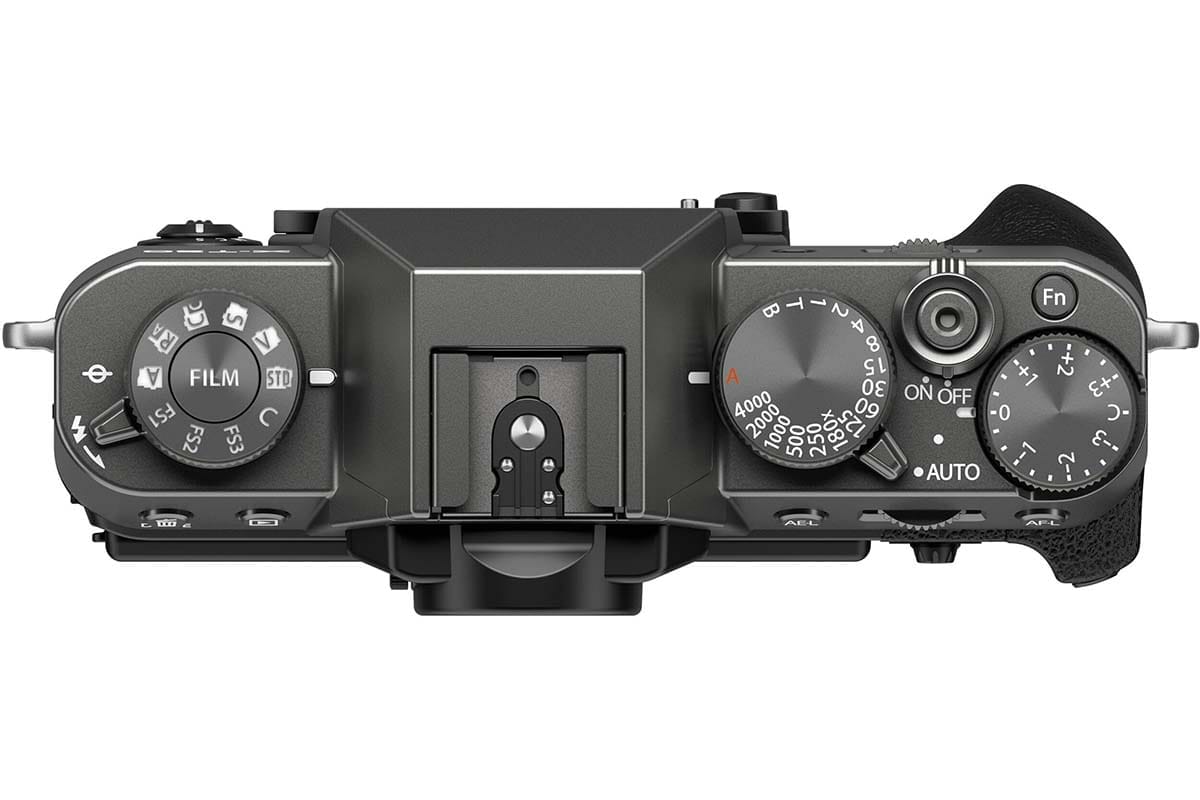
Assigning Buttons and Other Controls on the Camera Body
What Has Changed in the Body
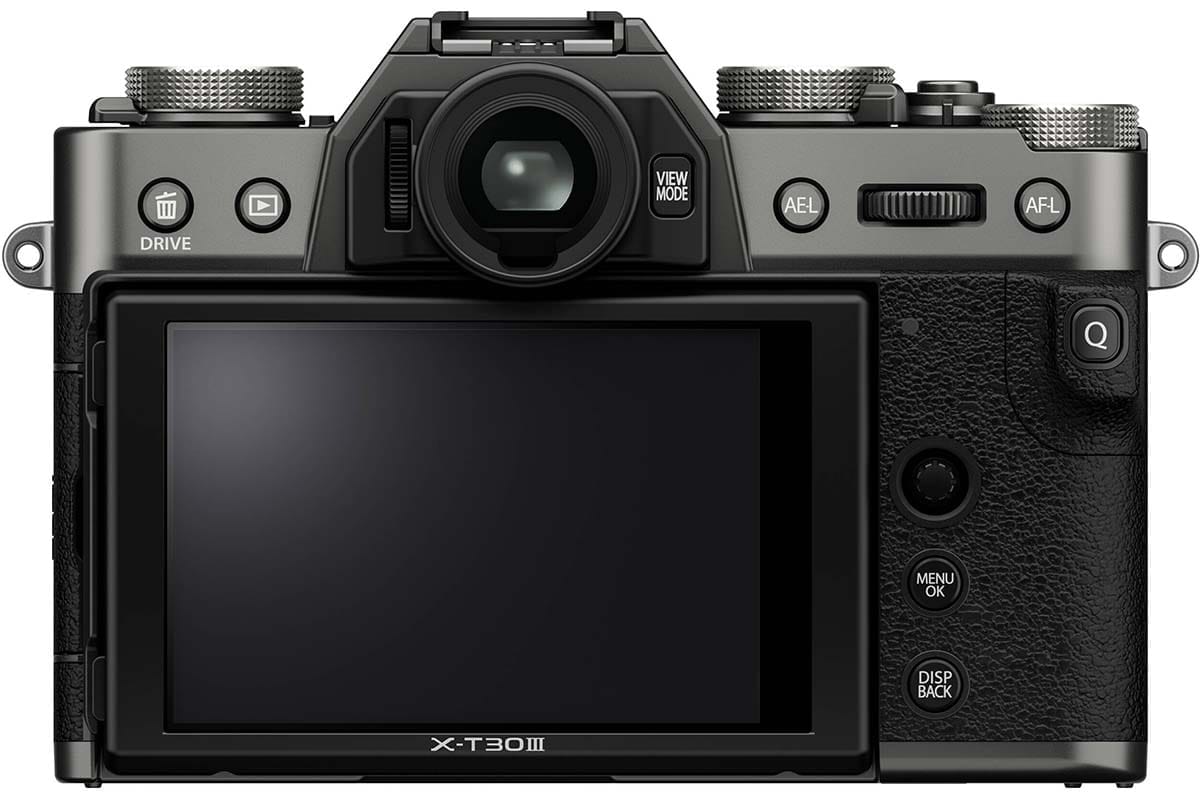
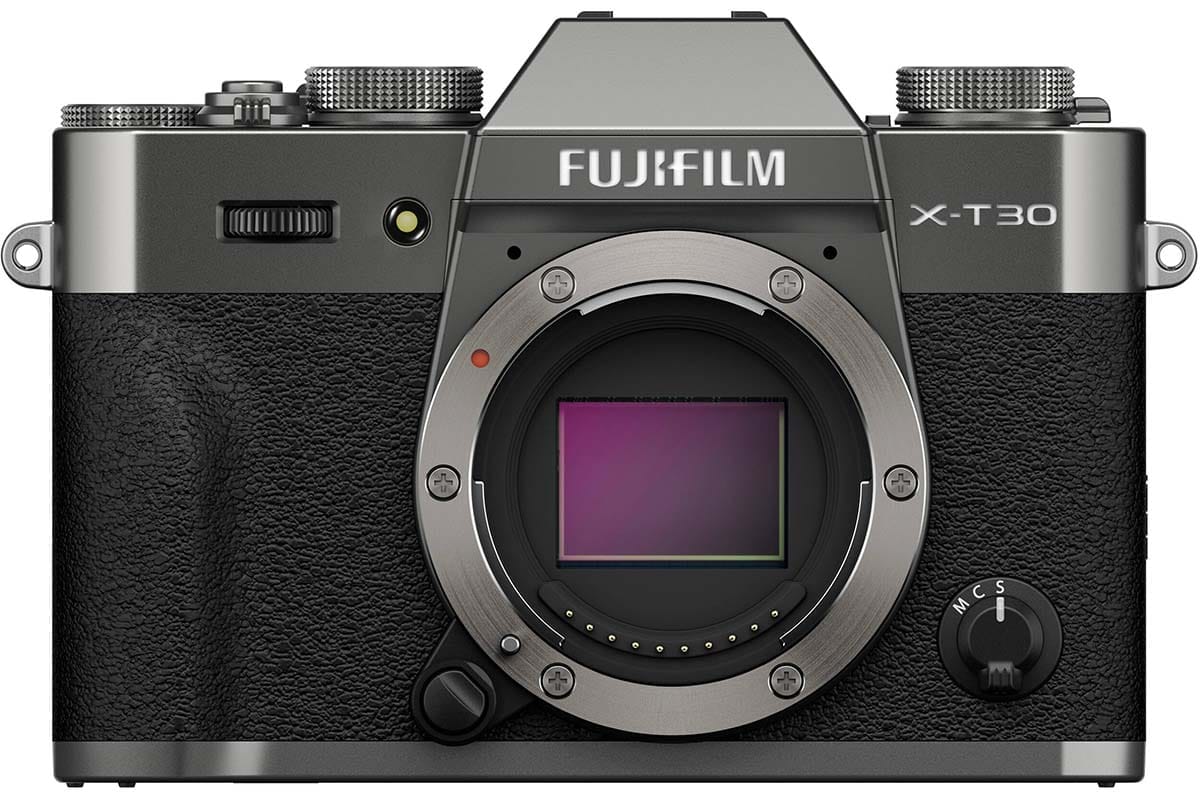
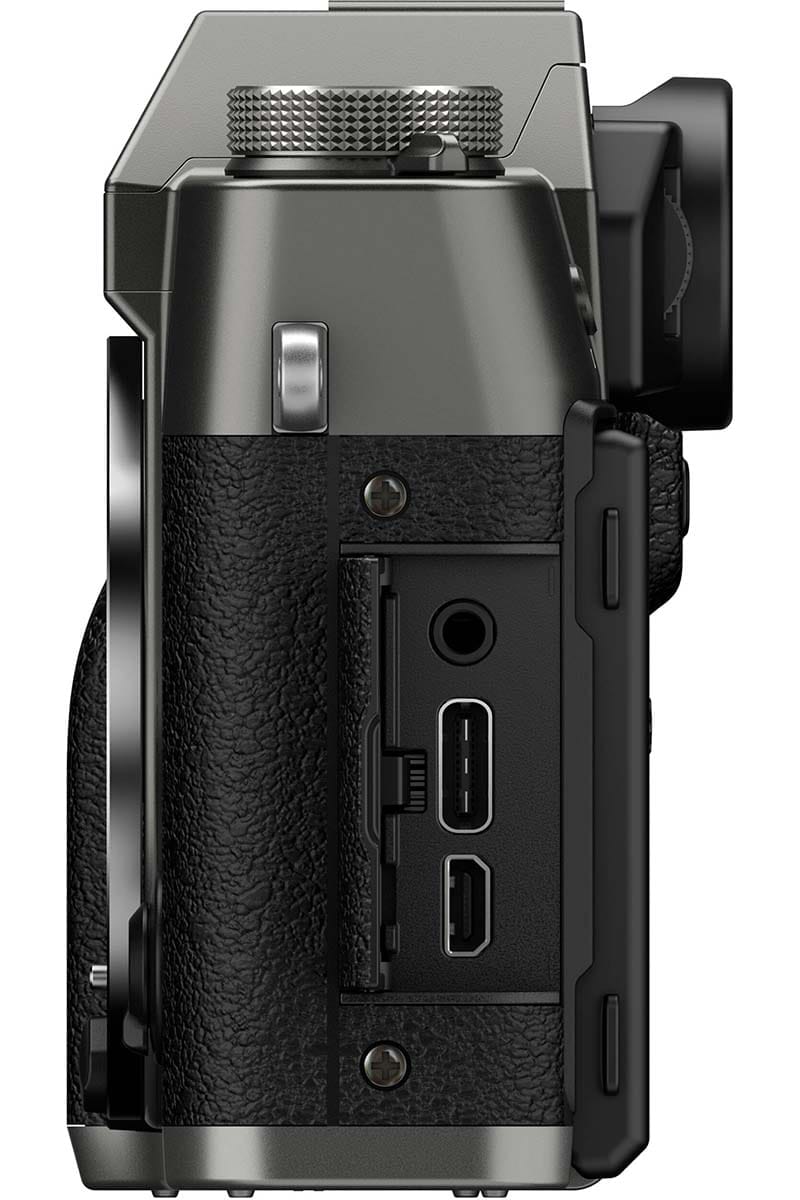
The camera body has barely changed compared with the previous model. The main physical difference is the updated dial on the top on the left shoulder of the camera. On the X-T30 II, this dial controlled drive modes, such as continuous shooting and bracketing. On the X-T30 III, it is a Film Simulation dial, providing quick access to film profiles and custom presets.
On the X-T30 III, the FS1–FS3 positions let you save full “recipes” — combinations of grain, white balance, tone, and other settings, on the cheaper X-M5, these dial positions are limited to basic simulations only. This makes the X-T30 III a more convenient tool for photographers who want to keep several unique “signature” styles at their fingertips. Drive modes have now been moved to the button that also works as the delete button.

General Impressions of the Camera Body
Overall, the body of all cameras in this series is fairly comfortable to hold. I’ve come across complaints that if you have large hands, only three fingers fit comfortably and the little finger slips through the grip, but I don’t entirely agree with this criticism. Your index finger should rest on the shutter button, and the front of the camera is actually held by three fingers. Personally, I find it comfortable, although my hand is not especially large.
I’ve also come across complaints that the Q button, which is located on the thumb rest, is placed in such a way that it’s possible to press it by accident. That has not happened to me, but maybe I simply have not shot enough with this camera.
The camera’s ergonomics seem good to me, and the body feels nice to the touch. I like a deeper grip, where the front finger grip is larger, but for amateur shooting and a calm working pace, this body is genuinely comfortable.
Tilting Screen
An important point for vloggers: this camera does not have a fully articulating screen; it has a tilting one. It does not rotate into a selfie position. So for vloggers who actively film themselves while holding the camera in their hand, this model is not suitable. If the camera is on a tripod, you can monitor the image through a smartphone.

Camera Sensor
Interestingly, the sensor in this camera line has not changed at all over the years. But that does not make these cameras any less good or “behind the times.” The 26-megapixel sensor with X-Trans CMOS 4 BSI technology performs very well in low light, has good dynamic range, and remains very competitive.
In many ways, this sensor is even better than Fujifilm’s newer 40-megapixel X-Trans CMOS 5 HR BSI sensor. In my opinion, in 2026, 40 MP on an APS-C sensor is a questionable decision. The point is that the more megapixels you have, the worse the camera performs in low light, all other things being equal. In practice, situations where you need good low-light performance are much more common than situations where you need extra megapixels. And most users of cameras like this will never face a situation where they need more than 26 megapixels.
Fujifilm X-T30 III vs Fujifilm X-T5
Let’s compare image quality on the X-T30 III and the X-T5. The Fujifilm X-T5 is a higher-end camera. It offers a higher level of dust and moisture protection, in-body image stabilization, two memory card slots, and a higher-capacity battery. But as tests show, because the X-T30 III has fewer megapixels, the X-T5 falls behind in image quality.

In this graph, we are comparing the dynamic range of these two cameras. The higher the figure, the better. What does ‘better’ mean? It means there will be more detail in both the dark and light areas of high-contrast shots. And as we can see, the X-T30 III is slightly ahead of the X-T5. I would not say the difference is critical. Still, it is an argument in favor of the Fujifilm X-T30 III.
Graph created based on tests from photonstophotos.net

In this graph, we are comparing noise at high ISO. The lower the line on the graph, the better the camera performs in low light conditions. And here again, the Fujifilm X-T30 III outperforms its ‘big brother’ – the X-T5.
Graph created based on tests from photonstophotos.net
Fujifilm X-T30 III vs Canon EOS R10 and Nikon Z50 II
It also makes sense to compare this camera with its main competitors from other brands in the same price segment: the Canon EOS R10 and the Nikon Z50 II.

Here we are comparing the dynamic range of the Fuji X-T30 III with the Canon R10 and the Nikon Z50 II. The higher, the better.
Graph created based on tests from photonstophotos.net

Here we are comparing high-ISO noise on the Fuji X-T30 III, Canon R10, and Nikon Z50 II. The lower, the better.
Graph created based on tests from photonstophotos.net
As we can see, in terms of image quality, the Fujifilm X-T30 III comes out on top. Personally, I expected this. Fuji has very good sensors, and in this regard, Fuji has long been the clear leader in the amateur market.
But Canon and Nikon also have arguments in their favor. In terms of autofocus speed and accuracy, Canon takes the lead, Nikon is very close to Canon, and Fuji lags slightly behind. Fuji’s autofocus is genuinely good, and you will probably be happy with it — until you try Canon. Canon and Nikon simply do it better.
The second important point: Fuji does not make full-frame cameras. They do not make them at all. Full-frame cameras by Canon and Nikon will produce better image quality than Fuji APS-C cameras, such as the X-T30 III, but they are also noticeably more expensive.
If photography is a hobby for you, go ahead and buy the Fujifilm X-T30 III. I am sure you will be happy with it. If you are thinking about moving into the professional league, there are arguments in favour of Canon and Nikon. Bear in mind that when you buy a camera, you are choosing a brand, and switching to another one later will be costly. Fuji lenses are only compatible with Fuji cameras, and the same is true for flashes. If you switch brands, you will have to replace not only the camera, but also the accessories.
Fujifilm X-T30 III Camera Manual
Fujifilm X-T30 III Specifications and Technical Details
Sensor
| Maximum resolution | 6240 x 4160 |
| Aspect ratio | 1:1, 3:2, 16:9 |
| Effective megapixels | 26 |
| Physical sensor size | APS-C (23.5 x 15.6 mm) |
| Sensor type | BSI-CMOS |
Image
| ISO | Auto, 160–12800 |
| Extended ISO | 80–51200 |
| Custom white balance | Yes |
| Formats | RAW, JPG |
| In-body image stabilization | No |
Focusing
| Autofocus |
|
| Manual focus | Yes |
| Number of focus points | 425 |
Screen / Viewfinder
| LCD display | Tilting |
| Forward-facing selfie position | No |
| Screen size | 3″ |
| Touchscreen | Yes |
| Screen dots | 1,620,000 |
| Live View | Yes |
| Viewfinder type | Electronic |
| Viewfinder coverage | 100% |
| Viewfinder magnification | 0.93 |
| Viewfinder resolution | 2,360,000 |
Shooting Features
| Longest shutter speed | 15 minutes |
| Fastest mechanical shutter speed | 1/4000 sec. |
| Fastest electronic shutter speed | 1/32000 |
| Aperture priority | Yes |
| Shutter priority | Yes |
| Manual exposure mode | Yes |
| Built-in flash | Yes |
| External flash | Yes |
| Continuous shooting | 8 frames per second |
| Timer | Yes |
| Metering modes |
|
| Exposure compensation | ±5, in 1/3 EV or 1/2 EV steps |
| White balance bracketing | Yes |
| Time-lapse, interval shooting | Yes |
| Video codec | H.264, H.265 |
| Modes |
|
Physical Features of the Fujifilm X-T30 III
| Lens mount | Fujifilm X |
| Memory card slot | One |
| Supported cards | UHS-I SD |
| Speaker | Mono |
| Interfaces | USB 3.0 (5 GBit/sec) |
| USB charging | Yes |
| HDMI | Yes, micro HDMI |
| Microphone port | Yes |
| Headphone port | No |
| Wireless connection | 802.11ac + Bluetooth 4.2 |
| Remote control | Yes, via smartphone |
| Battery | NP-W126S lithium-ion battery & charger |
| Weight, including battery | 383 g |
| Dimensions | 118 x 83 x 47 mm |
| Orientation sensor | Yes |
| GPS | No |
| Processor | X-Processor 5 |
Conclusion
The Fuji X-T30 III is an excellent modern camera for amateurs who shoot street photography, portraits, travel, and family photos. For professionals who do not shoot advertising and prefer the Fuji brand, I also consider this camera a very good solution. Actually, if you shoot ads for the internet, this camera will also work. Those who want to print photos measuring two by three meters in size may not have enough megapixels.
Is It Worth Upgrading If You Already Have the Previous Version?
The difference between the older models and the new Fuji X-T30 III is not in the image. The picture is the same. The difference is solely in convenience and features.
When it makes sense to switch to the Fuji X-T30 III:
- You are focused on shooting video and really need the new 6.2K Open Gate or 4K 60p modes.
- You need more advanced autofocus with artificial intelligence features.
- You love Fujifilm and want to use the newest image profiles.
- You simply want the most modern, stylish, compact retro camera.
When there is almost no difference compared with previous models:
- For relaxed shooting, both photo and video.
- For shooting in controlled conditions, such as a studio.
The Fuji X-T30 III is not a “wow, a completely new camera” kind of upgrade. It is more like “the same camera in a version that processes data a little faster and can do a little more.”
Boris Krupnik
Photographer, instructor, and author of a photography textbook.
